
My first pen-and-paper character was called Loranil Wintermond, a cleric. Somewhere, I actually still have his original character sheet. Holding it today is a little like travelling back in time: numbers, notes, equipment, probably a few decisions that I can no longer explain at all. But the name has remained. Loranil Wintermond.
Perhaps that already says quite a lot about what has always made pen & paper different from other games for me. I can barely remember many characters from computer games I once played. But I do remember a character I created many years ago with paper, pencil and a few dice.
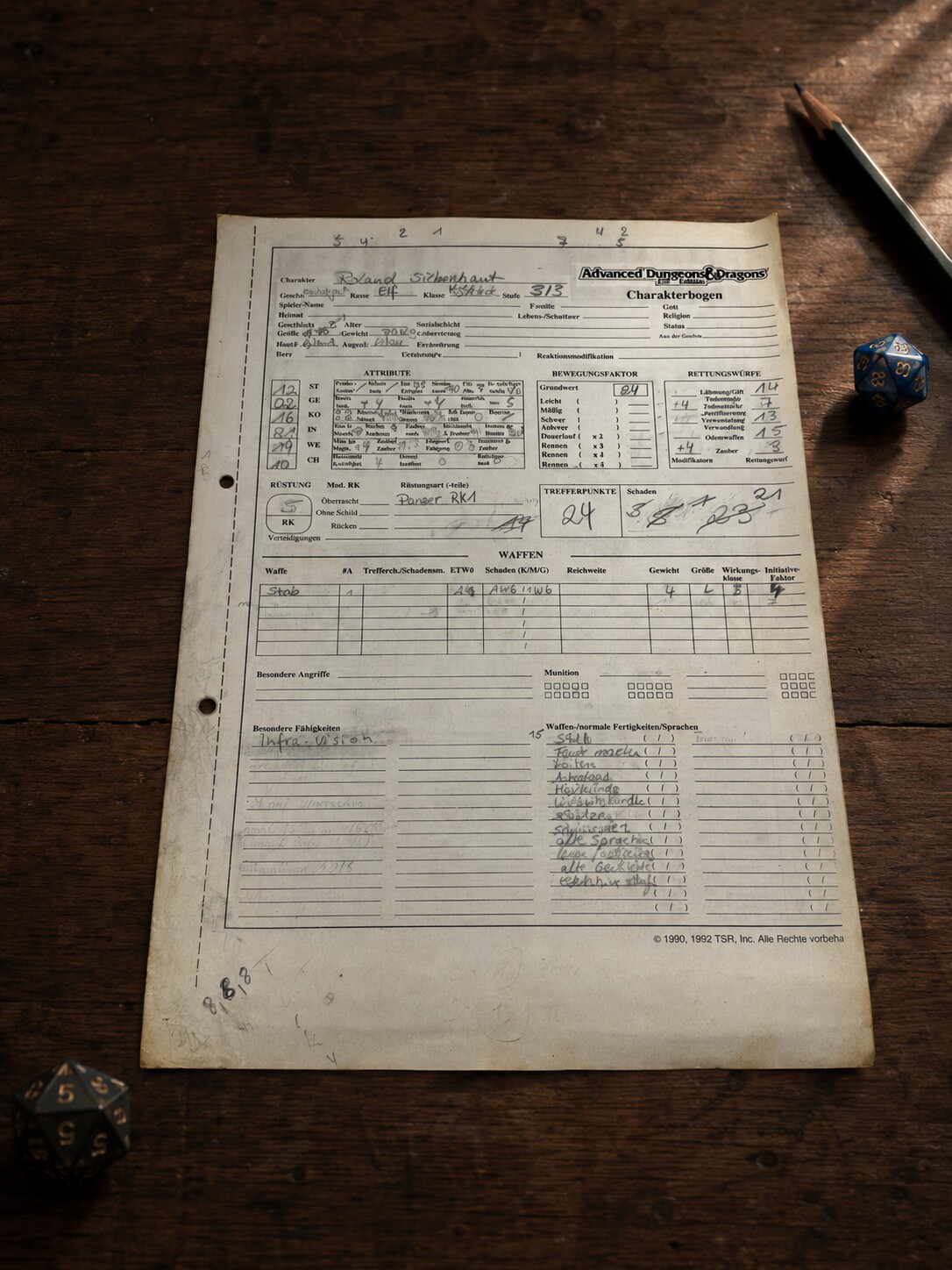
It began with AD&D
My entry into the world of pen & paper was Advanced Dungeons & Dragons 2nd Edition (AD&D 2E). Released by TSR in 1989, this edition was an extensive revision and reorganisation of the first edition and carried the game into the 1990s; during its era, campaign settings such as Ravenloft and Planescape became legendary.
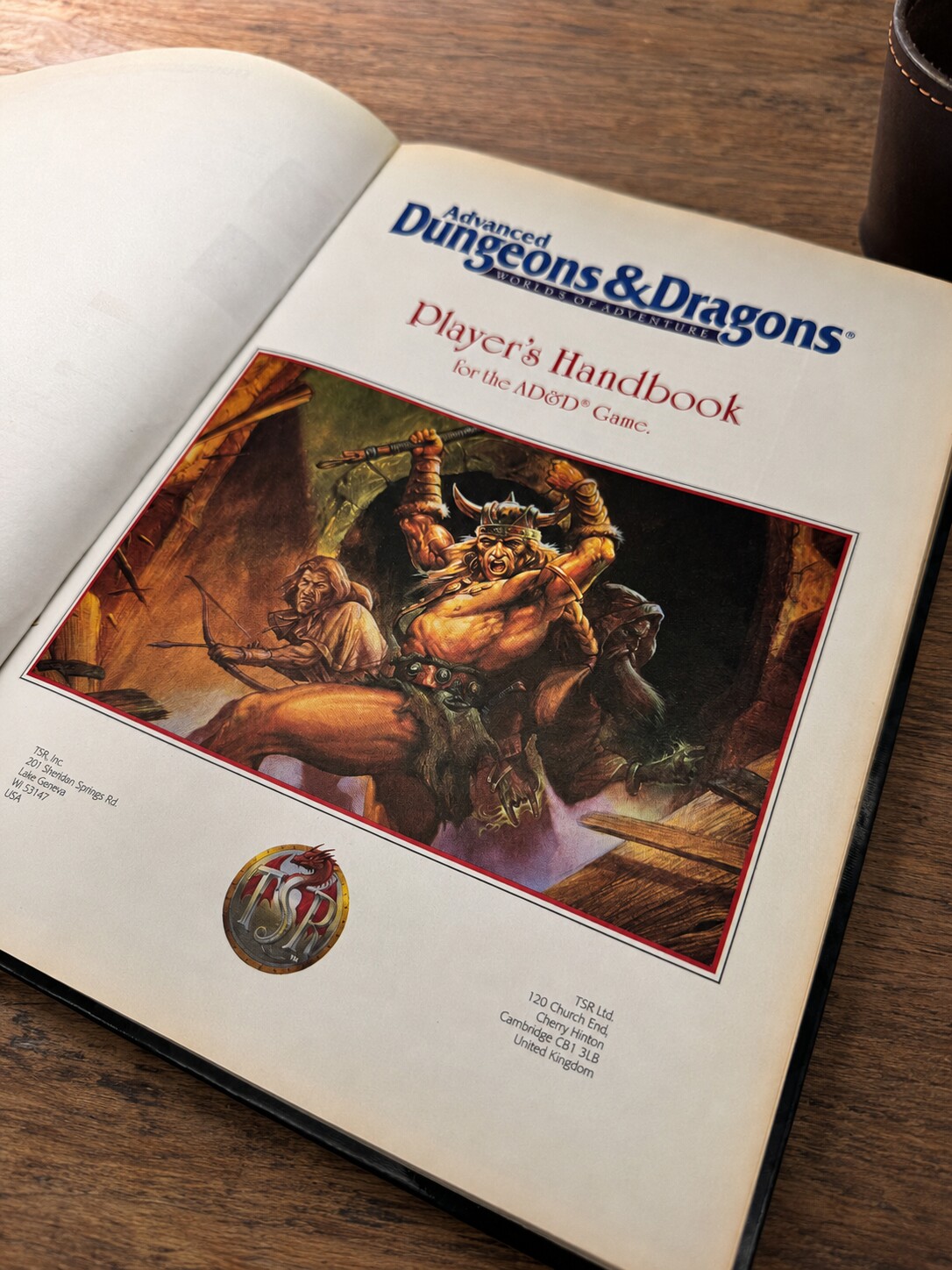
Back then, thick rulebooks, character sheets and tables were simply part of the experience. Many things were less convenient than they are today: information was not always one click away, digital character generators did not exist, and a group could not spontaneously assemble via Discord. Perhaps that was part of the appeal. People sat together around a table and created a story without anyone knowing exactly where it would lead.
Of course there were rules, statistics and dice that determined whether an action succeeded or failed spectacularly. But the real game emerged between the rules: one decision created a consequence, a minor non-player character suddenly became someone important, and an apparently simple situation occasionally descended into complete chaos because players have a remarkably dependable tendency to do precisely what the game master did not expect. At some point, these characters were no longer just a few numbers on a sheet of paper. They had a story.
Later, things became much darker
I did not stop with AD&D. For quite some time, I actively played and ran Vampire: The Masquerade; later, Werewolf and Shadowrun joined the mix. With its combination of cyberpunk, magic and fantasy, Shadowrun went in a very different direction—but for me it belonged to the same period in which I discovered darker worlds and more character-driven systems.
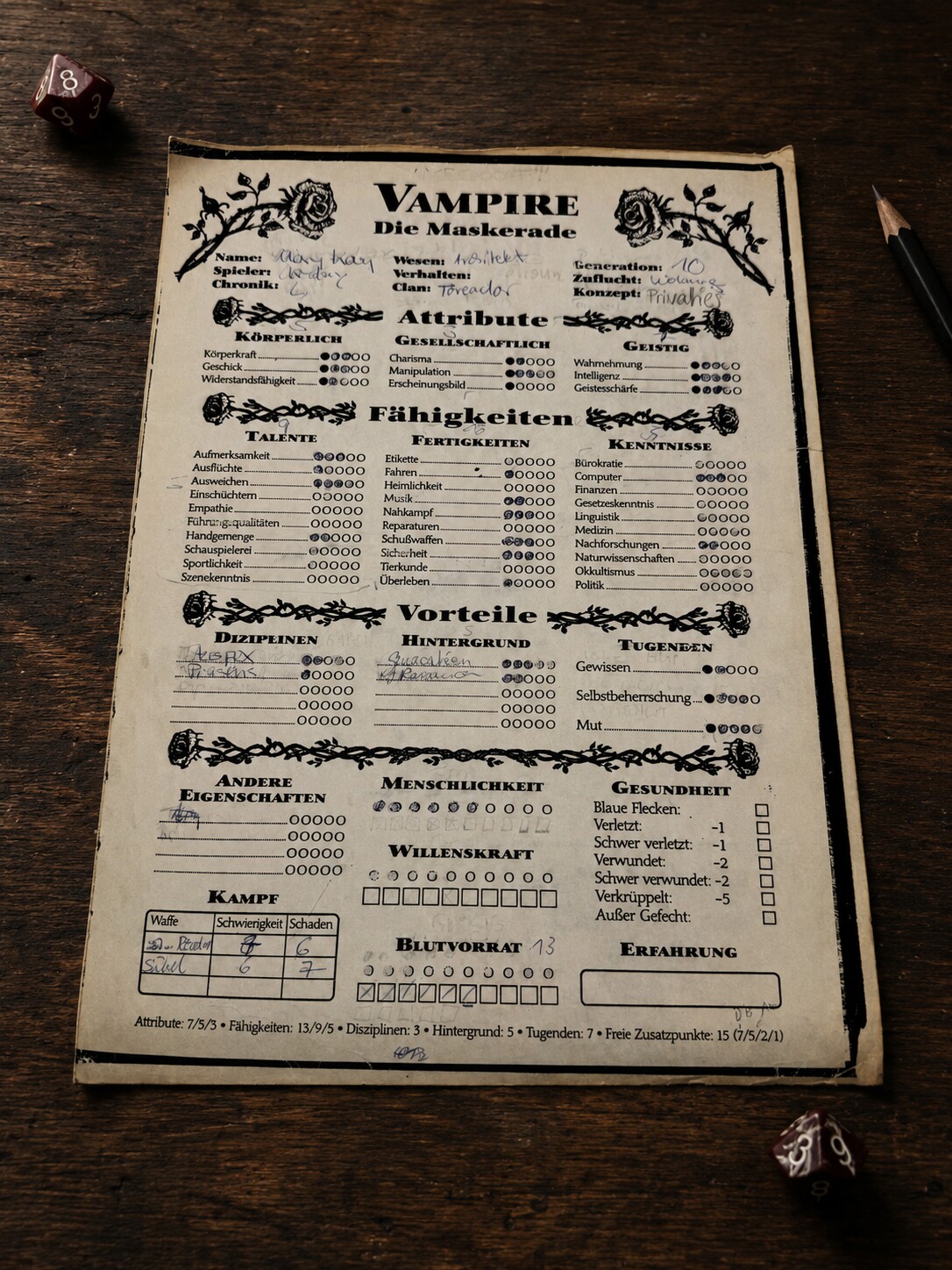
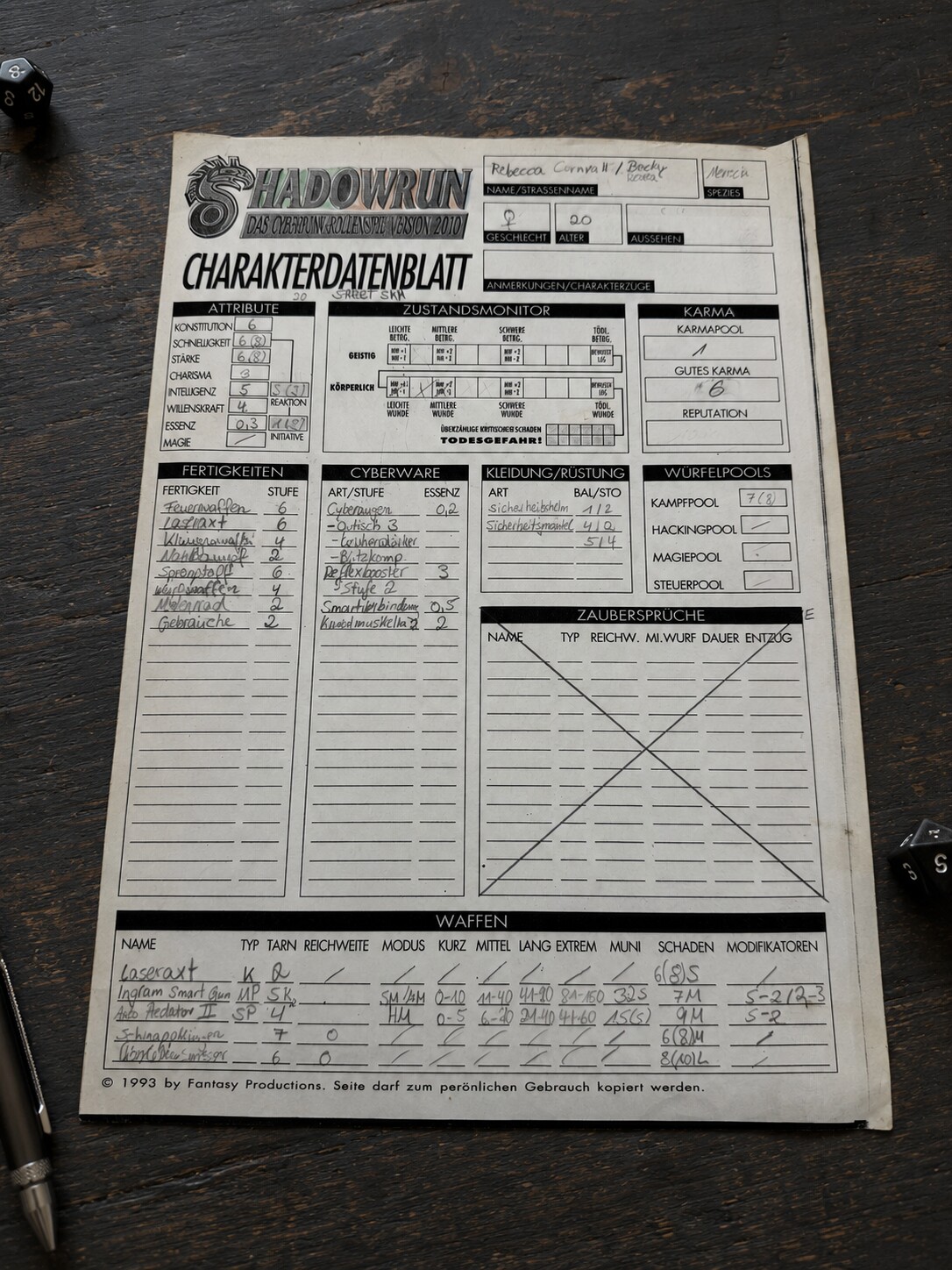
This revealed a very different side of pen & paper to me. It was suddenly no longer just about overcoming adventures together—atmosphere, characters, moral choices and the world itself carried a different weight. As a game master in particular, I found that incredibly exciting, because a pen-and-paper game master is not simply someone who supervises the rules. You build a world, devise people, places and conflicts, try to anticipate what the players might do—only for them to head in a completely different direction five minutes later. So you improvise. To this day, that remains a major part of the fascination for me.
Pen & paper has changed—and yet it really has not
When I look at role-playing today, it is of course a different world. There are beautifully produced rulebooks, countless systems and settings, digital tools, online sessions, virtual tabletops, streams and videos. In a matter of minutes, you can now watch how other groups play a system for which you once first had to find somebody who had even heard of it. Role-playing has become more visible and accessible.
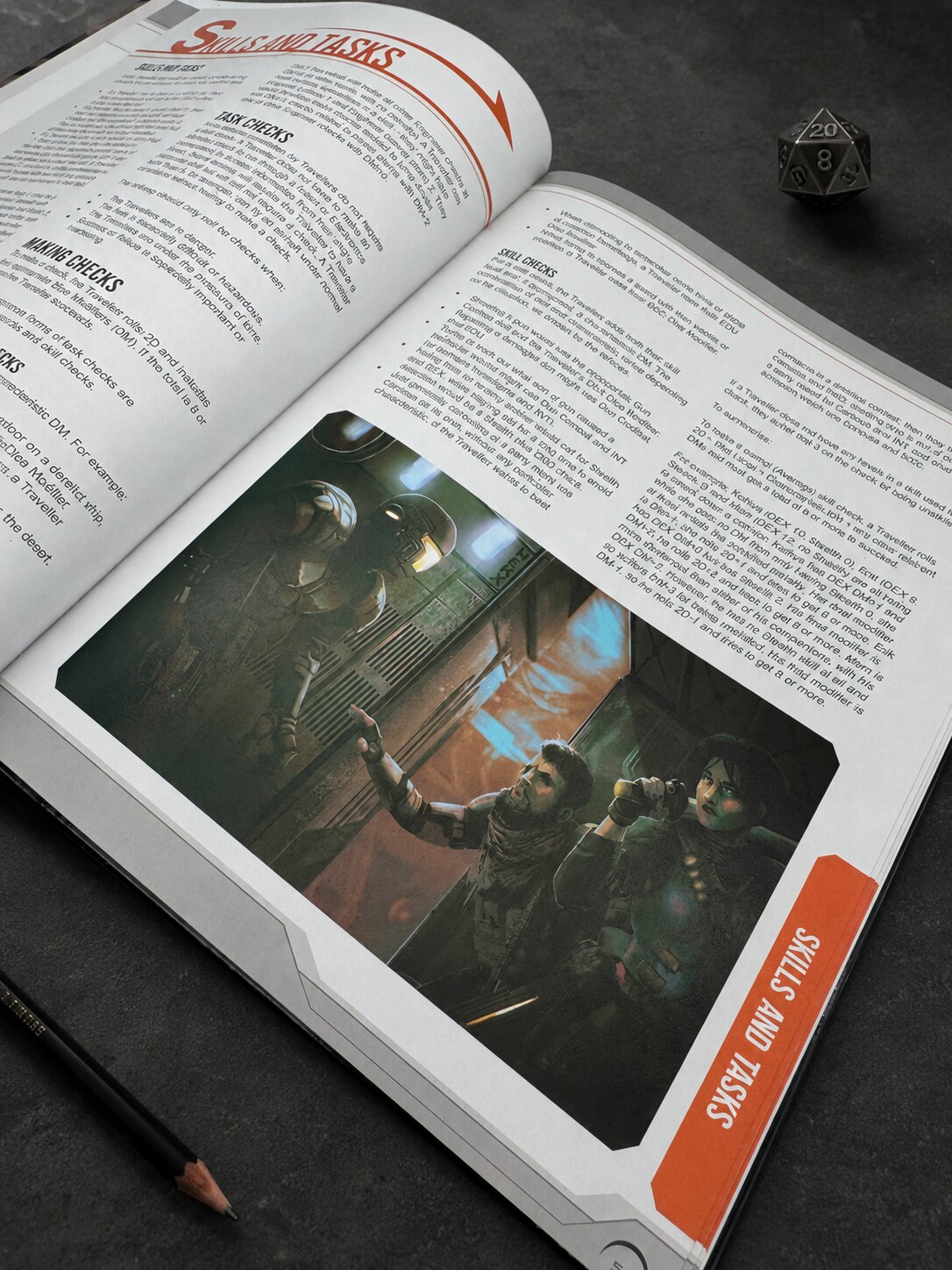
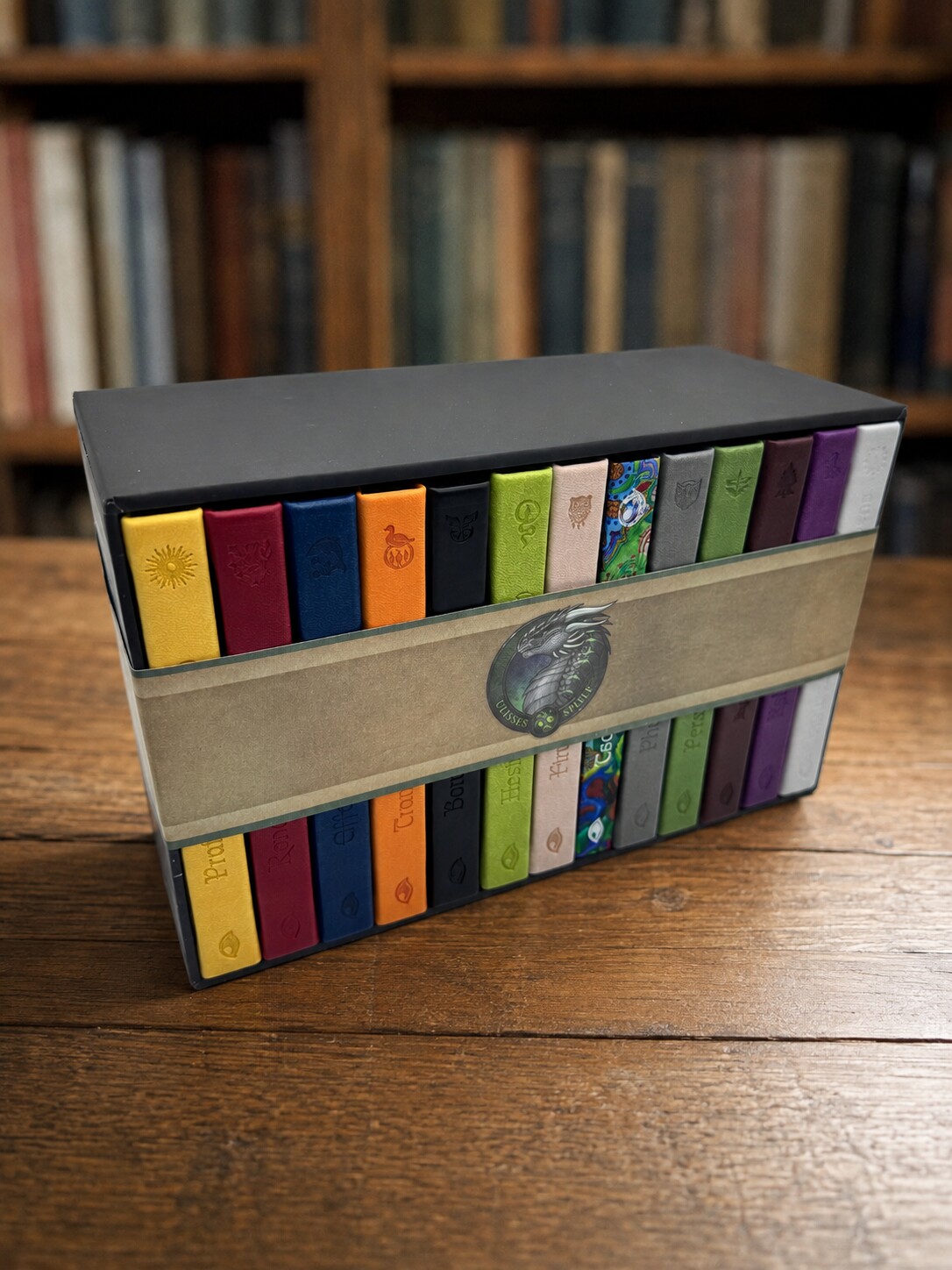
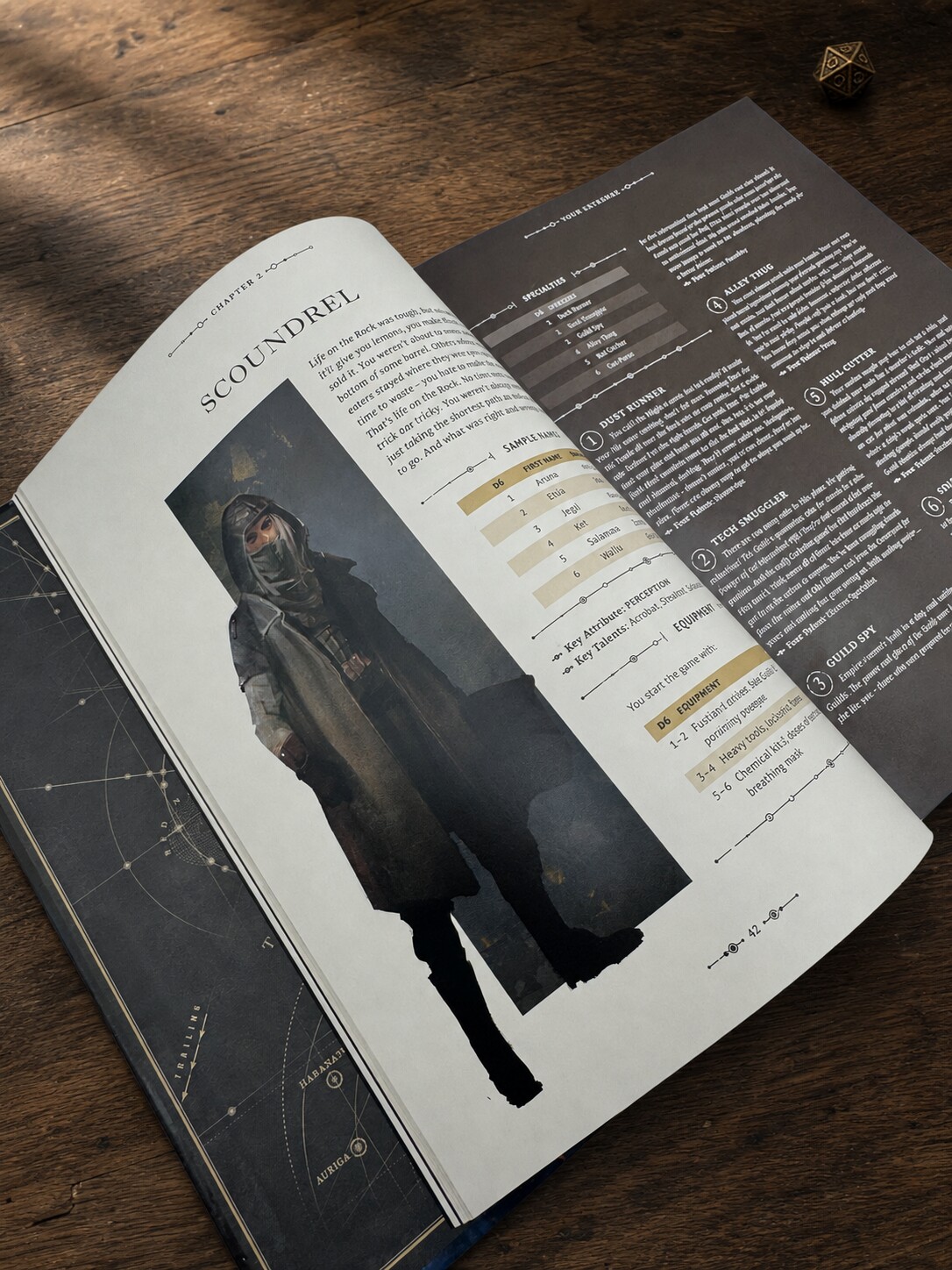
Today’s role-playing games display enormous visual and thematic variety—from carefully produced rulebooks to unusual settings.
At the same time, the essential element has remained remarkably unchanged: a few people come together, someone describes a situation, and eventually comes the question “What do you do?” From that moment on, practically anything can happen. Even the best computer game cannot reproduce this completely, because I can only do what its developers once anticipated. In pen & paper, I can come up with the entirely absurd idea of arguing for half an hour with a supposedly irrelevant innkeeper. And if the game master plays along, that may become the best part of the evening.
Why I would like to play more again today
I would actually like to play pen & paper much more actively again. The problem is not desire, but something many adult role-players probably recognise: time. Assembling a regular group is a minor organisational feat—five adults somehow have approximately six different calendars.
And if you want to be the game master, there is another decisive factor: preparation. Of course you can improvise, and of course not every evening needs to be prepared down to the smallest detail. But a good session still requires attention. I want to know where the story might go, prepare characters and situations and engage with the system. Perhaps that is the greatest change between then and now: pen & paper used to be one of the things for which time was simply available. Today it is one of the things for which you must consciously make time.
Perhaps that is precisely why the enthusiasm has remained
Today, I once again spend a great deal of time with role-playing games—albeit in a different way. I see new systems, fantastic books, dice, miniatures and worlds. I would probably have wanted to try some of them immediately in the past.
And sometimes an old rulebook is lying somewhere. Or the character sheet belonging to Loranil Wintermond. Then I realise that, despite all the new systems, digital possibilities and intervening decades, one thing has not changed at all: the fascination still begins with the same simple idea that a few people sit together and imagine a world that, in that moment, exists only for them. It needs no screen and no perfect graphics. Sometimes a table, a few dice, paper and imagination are enough—and a character whose name you still remember decades later.